
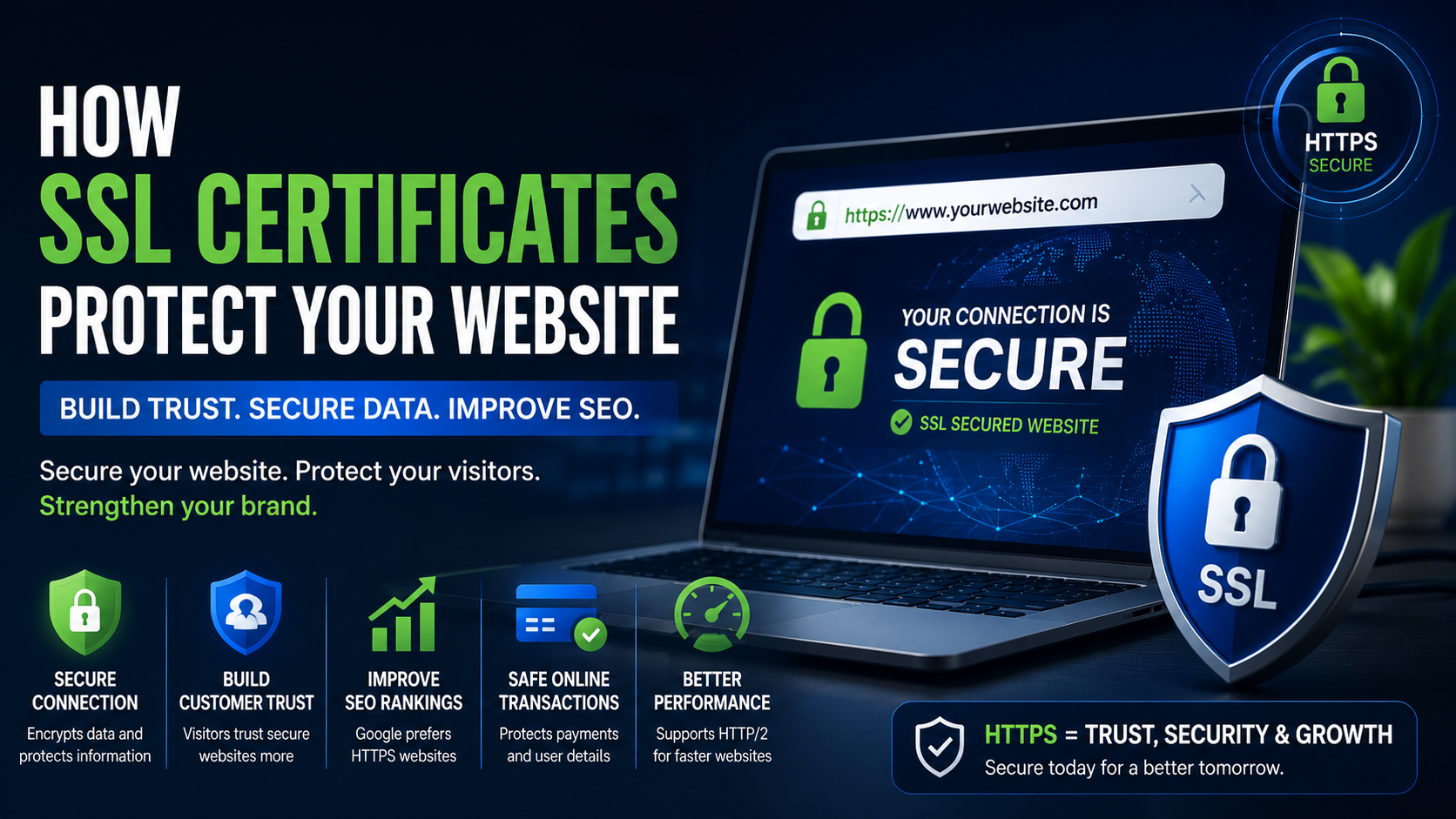
When visitors open your website, they expect their information to remain safe and secure. Whether they’re filling out a contact form, making a payment, or simply browsing your services, security plays a major role in building trust.
One of the easiest and most important ways to protect your website is by installing an SSL certificate.
If you’ve ever noticed the padlock icon (🔒) beside a website URL, that’s SSL in action.
What Is an SSL Certificate?
SSL (Secure Sockets Layer) encrypts the data exchanged between your website and your visitors.
Instead of sending information as plain text, SSL converts it into encrypted data that hackers cannot easily read.
Websites with SSL use:
https://
instead of
http://
The “S” stands for Secure.
Why SSL Is Important
Without SSL protection, sensitive information can be intercepted during transmission.
SSL protects:
- Contact form submissions
- Login credentials
- Customer information
- Payment details
- Business communications
This extra layer of security helps protect both your business and your customers.
Builds Customer Confidence
Visitors immediately notice whether a website is secure.
A website with HTTPS and a padlock icon appears:
- Professional
- Reliable
- Safe to browse
- Trustworthy
Customers are far more likely to submit inquiries or make purchases on a secure website.
Helps Improve Google Rankings
Google considers HTTPS a ranking factor.
Secure websites have a better chance of performing well in search results compared to unsecured websites.
While SSL alone won’t guarantee top rankings, it contributes to better SEO and user trust.
Protects Your Brand Reputation
A security warning in a visitor’s browser can immediately drive potential customers away.
Modern browsers often display messages such as:
- “Not Secure”
- “Your connection is not private”
These warnings create doubt and can negatively impact your business image.
SSL helps prevent these issues and protects your brand reputation.
Essential for Online Payments
If your website accepts:
- Online payments
- Membership registrations
- Customer logins
- Booking requests
SSL is essential.
It protects sensitive customer information and supports secure online transactions.
Supports Better Website Performance
Modern SSL certificates work with newer technologies such as HTTP/2, which can improve loading efficiency and provide a better browsing experience.
This means your website can be both secure and fast.
Signs Your Website Has SSL
Visitors can quickly identify a secure website by checking for:
- HTTPS in the address bar
- Padlock icon beside the URL
- No browser security warnings
These small visual indicators have a significant impact on customer confidence.
Best Practices
To keep your website secure:
- Always use HTTPS on every page.
- Renew your SSL certificate before it expires.
- Redirect HTTP traffic to HTTPS.
- Regularly update your website and plugins.
- Use strong passwords and secure hosting.